• About
  • Blog (Ext.)
  • BOOKS
    • AURELIUS
    • GET OUT!
    • JUDGING ATHENA
    • Perrin On Politics
    • SOLD OUT
    • The Happy Little Cigar Book
    • THE SUBSTITUTE
  • Contact
  • Education Resources
  • News Links

PERRIN LOVETT

~ Deo Vindice

PERRIN LOVETT

Category Archives: Other Columns

Columns concerning any and everything. Enjoy!

GUEST POETRY: ‘The Repaganization of Motherhood’ By Walt Garlington

07 Wednesday Oct 2026

Posted by perrinlovett in Other Columns

≈ Comments Off on GUEST POETRY: ‘The Repaganization of Motherhood’ By Walt Garlington

Tags

Christianity, guest post, motherhood, Poetry, Walt Garlington

*Note: Once again, I am beyond grateful to present another outstanding poem by the one and only Walt Garlington. Thank you sir! Many things have gone astray in the postmodern collapse, motherhood being but one of them. Walt offers a stark comparison and contrast, then to now. Read on! 


‘The Repaganization of Motherhood’
By Walt Garlington


In the days when Hadrian held the reigns
Of the Roman state, a fruitful olive tree
Growing in the Italian land, Sophia,
Godly-minded, brought forth three children,
A cluster of virtues, Faith, Hope, and Love,
Who, for their faithfulness to Jesus Christ,
Were brought before the Emperor himself.
Interrogating the daughters one by one,
Growing wrathful at their constancy in Christ,
Each he had tortured and slain, as their mother
Encouraged them in their sufferings
To remain steadfast, till a martyr’s crown
They received. Rejoicing in their triumphant feat,
And burying the precious relics
Of their bodies, the fruit of her womb
Made holy through the contest with the foe,
Sophia hastened to join them in Heaven,
Reposing three days after, slain in spirit.

In the days when an abstract People,
Strange non-entity, supposedly govern themselves,
Mothers take forms found in ancient pagan myths,
Monstrous creatures who their offspring murder
For a self-centered reason, consign them
To oblivion without a grave to rest in,
And console their consciences with the salve
Of support from fellow heartless women,
Or seek death to silence the Voice of God within.
Such the Cyclopean spirit that pervades:
A fitting friend for the ghost of Prometheus
That fills that hearts of men with loathsome hubris.

BOOK REVIEW: Bodaciously True & Totally Awesome, Episode IV: Secret Lovers by Chris Orcutt

06 Tuesday Oct 2026

Posted by perrinlovett in Other Columns

≈ Comments Off on BOOK REVIEW: Bodaciously True & Totally Awesome, Episode IV: Secret Lovers by Chris Orcutt

Tags

1980s, book review, BTTA, Chris Orcutt, fiction, SECRET LOVERS

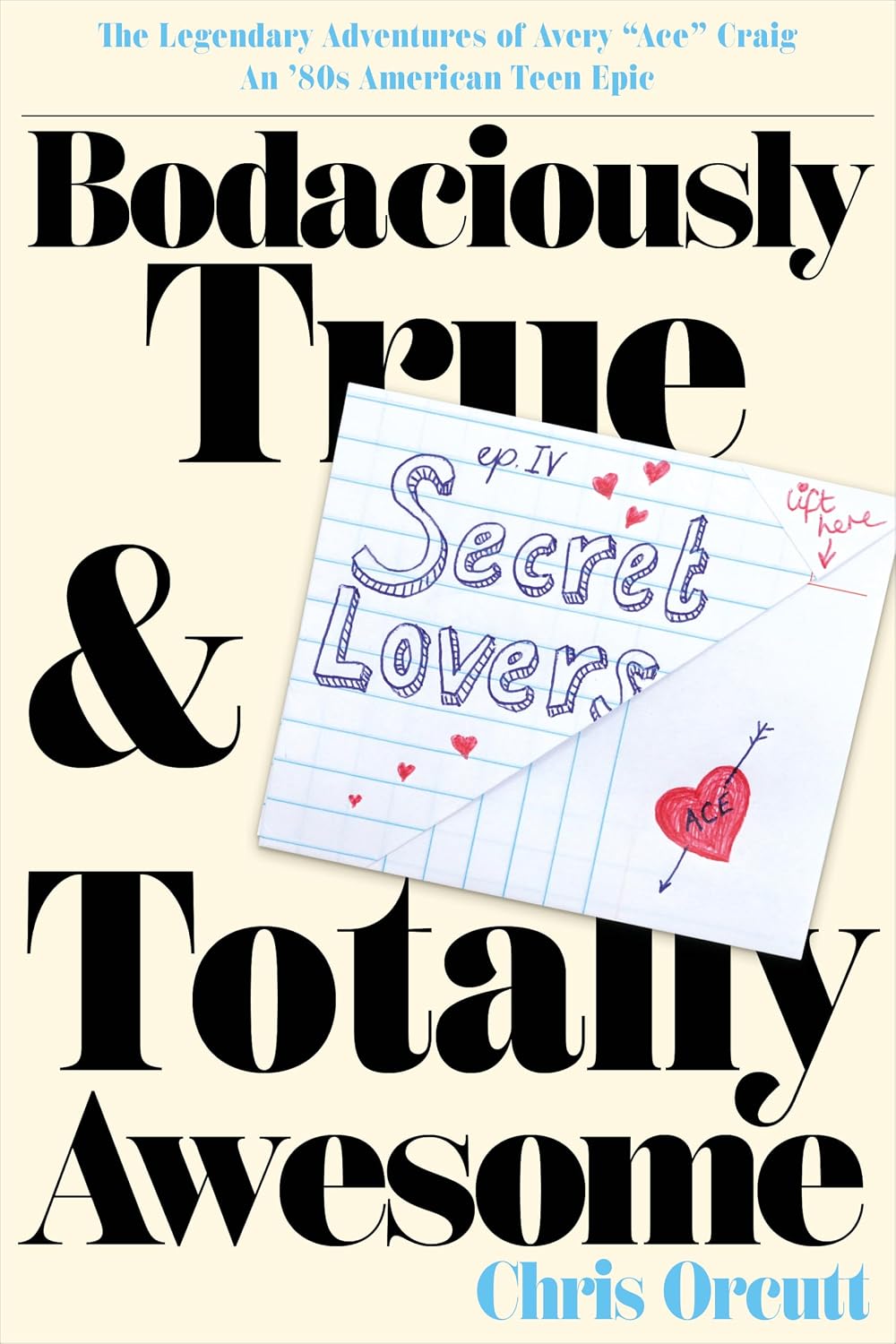
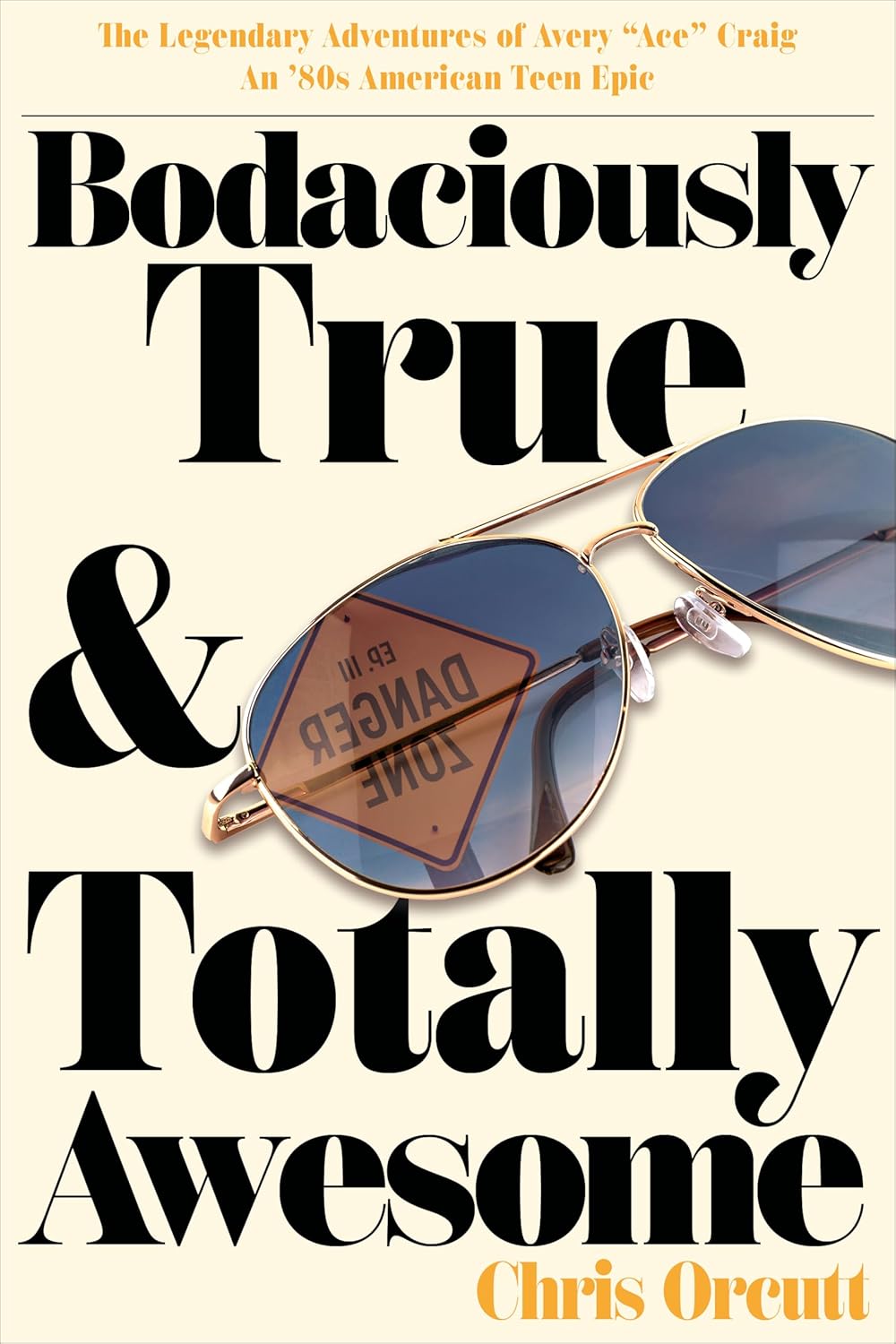
Bodaciously True & Totally Awesome, Episode IV: Secret Lovers by Chris Orcutt

Review by Perrin Lovett


Say, friends, do you enjoy a good visible polyrhythm? Yeah, I didn’t know that was a thing either, not until I read chapter 21 of today’s subject work of incredible fiction. But trust me, you’ll enjoy it: the dance moves, something Robert Palmer’s dancers would have shimmied along with, and the book. And that book is Secret Lovers, the fourth episode in Chris Orcutt’s Bodaciously True & Totally Awesome, the epic that literally brings the 1980s back to life. 

(©Have Pen, Will Travel. Cover design by Victoria Heath Silk.)

*Orcutt, Chris, Bodaciously True & Totally Awesome, Episode IV: Secret Lovers, New York: Have Pen, Will Travel, 2026.

New York novelist Chris Orcutt has three solid decades of experience crafting literature, with one of them dedicated almost exclusively to writing Bodaciously True & Totally Awesome (BTTA), a masterpiece roughly the length of In Search of Lost Time (Remembrance of Things Past) by Proust. Your reviewer had not really considered it before, but many of Orcutt’s themes in BTTA run along the same lines as those in Remembrance—young love, growing up, timing, appreciation of the arts, et cetera. Orcutt provides a new take on all of those familiar motifs, doing so abnormally well, while integrating elements Proust never touched on, such as action and adventure. Of course, the era and scene-setting are completely different. And that difference makes BTTA especially interesting to America’s Generation X: this is our memory of the past, of a time lost to four decades of temporal transit. And with Episode IV, Secret Lovers, Orcutt brings the past back to life in a way perhaps no other author has ever dared. On full display is Orcutt’s creative genius, impeccable precision, and nearly surreal attention to every little detail. Four episodes in, Secret Lovers might be your reviewer’s favorite so far. Why? Part of it has to do with much of the nostalgia I’ve mentioned in my previous reviews. But the main reason is that it is simply a damned good story! So let’s dive right in.

I hereby incorporate all points of my previous reviews of Bad Boy, True Blue, and Danger Zone as if each point were restated in full. In Secret Lovers, the literary roller coaster goes so fast and hard that one might be well-advised to go limp and just let it ride. Avery “Ace” Craig keeps up the heroic questing readers have come to expect and enjoy as he intrepidly ventures into new territory, all of it set to our glorious 1980s music. The pop-rock flows, as do more classical themes. Orcutt even breaks down the exact timing within a few tunes he references: see “Bugler’s Dream and Olympic Fanfare Medley” on page 35. Also, “The Devil Went Down to Georgia” never hurt any book!

As with the other episodes, Secret Lovers shifts gears again — ”drop a gear and disappear,” as the saying goes. This time, instead of slowing, as in Danger Zone, the days roll right along in the story, though each part and act is examined in close detail. And there is an intensification covering many fronts. The result is a thrilling experience that will have the reader on the edge of his seat, scratching his head, pondering, cheering, fearing, and feeling a sense of awe. In short, it’s a spectacular book. And Orcutt has plenty of room to work, as Secret Lovers is the longest episode yet, 422 pages of riveting dramatic exhibition. The book’s chapters are not named—a point I think I failed to make previously; rather, each major scene within a chapter has its own catchy subtitle. For example, on or about page 257, the subtitle is “Gemma’s Fault.” But is it really? One will have to read chapter 17 to find out. Also, speaking of finding out, I’ll bet the seasoned reader likes Gemma. Right? And there’s a chance that more than a few Gemma fans liked those ‘80s video games. What if both of those likes were somehow combined? Read and see; you’ll dig it like a bee on pollen.

As the book opens, Avery sets about resolving the cliffhanger from the end of Danger Zone. Through great wit, selflessness, determination, and muscle, he saves himself and the two ladies he’s trapped with. By now, you know they’re Gemma and Beverly. Orcutt inserts a neat reference to Pheidippides during the sequence, and Avery creates his own legend, replete with a daydream, honors, and a bit of notoriety. His fame, however, leads to the loss of Penny as a girlfriend, something our hero had been contemplating anyway. Relief? Not exactly; from there things get complicated.

The reader will have to discover for himself who the title refers to, and there might be more than one choice or way of looking at matters. Here, I note that Orcutt does a fascinating job going inside the male mind, along with a look at its feminine counterpart. Things quickly escalate! Just when things feel cozy with Gemma, Caitlyn Cray returns. Avery is not opposed to the concept of the “side piece,” as they call her on the street. Nor does he turn down the chance to coach a gaggle of lovely young ladies towards a talent show victory. He also receives what might be the longest and deepest love note in literary history. The law gets involved. Again. And to make Pa happy, if or when Pa finds out, Avery flips the script and uses Latin in geometry class! Of course, he’d better come up with something soon, as there’s a problem with the latter subject. Regarding that problem, he now has an ally, though as of the end of Secret Lovers, they still haven’t concocted a plan that works. Towards the end, Avery even deals with a pesky Gamma stalker. And in the “Jones-Craig Alliance” sequence in chapter 24, he also has to contend with good, old-fashioned suave pretentiousness as it takes aim at his girl. One of them, anyway.

The whole plot moves along fluidly and rapturously thanks to Orcutt’s writing style, exorbitant attention to detail, and lucid imagination. Again, most uncannily, the time in Secret Lovers flows on as it did in the first two episodes; concurrently, keen consideration is given to everything, a detailed exploration just like in Danger Zone. Avery and company walk, run, struggle, and play in a world of details, those ordinary and highly unusual. 

As for the commonplace, it’s really more a matter of light or familiar things, like Orcutt’s use of the bygone department store, Caldor. There’s just something about it. I cannot recall whether I ever visited a Caldor store in person, back in the day; however, with Orcutt’s you-are-there storytelling, I might as well have. As an example of serious matters, the Chernobyl nuclear disaster is presented in an interesting context. 

Something very unusual and serious happens. Readers may know by now that Avery does a little moonlighting work for one of Uncle Sam’s alphabet agencies. In Secret Lovers, chapter 15, he gets involved with another one. See pages 212-232. I’ll not give the process away here, a form of junior “sheep dipping,” but Orcutt presents the matter convincingly and more realistically than one might imagine is possible. And this kind of scenario is not only possible, but very real. In fact, the situation comes across very much like what Udo Ulfkotte describes in Gekaufte Journalisten (Bought Journalists) and his own youthful recruitment by the West German BND. The gubmit recruiter nails two of Avery’s weaknesses, one of which is, as one might imagine, his susceptibility to influence by the fairer sex. While Orcutt’s usage is, of course, fictional, please know that the kind of thing he’s bringing to life really does exist. The scene is excellent and foreshadows the coming episodes of BTTA. We’ve got something to truly look forward to. Know that Avery may be hard-pressed in the future.

He’s already pressed, mostly concerning girls, as-is. Caitlyn and Gemma would be enough, but he also has loose ends and loose screws to wrap up with Inge and Irina. And more ladies too. The boy is smart, wicked smart, but he is sixteen. He spends a lot of the book wondering what he’s doing and why. The reader will ponder along with him. This installment really hit on all cylinders concerning the reading balance between your reviewer’s teenage past and his cresting-the-hill present. 

Secret Lovers ends with another cliffhanger. And the current suspenser has several parts: a ruse to placate an elderly neighbor; and two young women, mere feet apart, whose meeting would be catastrophic. The very end takes place in a gallery hall at the NYC Met. Unlike Caldor, I know for certain I have been to the Met. In fact, I’ve been in that gallery hall leading back to the lobby and exit. Here, despite Orcutt’s excellent description, I still can’t precisely recall my own experience there. Call it a vexing pleasure, something to be expected from this epic: BTTA: Where reading is always a pleasure.

Bodaciously True & Totally Awesome, Episode IV: Secret Lovers is, like the other episodes, a mandatory read. It launches on October 20, 2026, so pre-order it today. While you’re waiting, and if you’re not already up to speed, please review the following:

  • My interview with Chris Orcutt.
  • Episode I: Bad Boy is available on Amazon. Please read my review.
  • Episode II: True Blue is also on Amazon. My review.
  • Episode III: Danger Zone is on Amazon. My review.


Discussion Summary: The Future of Books and Information in the Multipolar World

12 Saturday Sep 2026

Posted by perrinlovett in Other Columns

≈ 1 Comment

Tags

books, information, Iran, multipolarity, West

The Future of Books and Information in the Multipolar World

Summary of discussion with the Metapolitics Think Tank


On Monday, August 31, 2026 of the Gregorian calendar, I sat down with Taha Jahandideh of the Metapolitics Think Tank in Iran for a forum discussion of books, literacy, culture, and more in the emerging multipolar era. We were joined by several other gentlemen from America, Europe, and West Asia, including Speculum Orientis and Constantin von Hoffmeister, in a session that lasted approximately 90 minutes. Here follows a summary of some of what was discussed, as compiled by Taha, whom I cannot thank enough, in Persian and English.

First, I note that by the Islamic or Persian solar calendar, the date coincided with Mawlid, the birthday of the Prophet Muhammad, a blessing be upon Him. As such, I thanked the majority Muslim forum for hosting the event on a sacred holiday. Further, I relayed what I considered an amazingly apropos quote, given the topic of our discussion. The first public, inspired words spoken by the Prophet, according to Sura Al-’Alaq 96:1, were: “READ! In the name of the Lord.” Finding this point inspirational, I then followed up with Proverbs 1:7: “Fear of the Lord is the beginning of knowledge.” We then jumped right into what was a lively and informative talk. 

My conclusory notes are at the very end. The summary is published on Telegram here:

https://t.me/metapolitic/122

https://t.me/metapolitic/123

https://t.me/metapolitic/124

Persian:

عصر پساسواد: مسخ عامدانه اطلاعات و سنت در جهان غرب

🔻پرین لاویت، نویسنده و تحلیلگر آمریکایی، در نشستی با میزبانی اندیشکده فراسیاست، ضمن تشریح بحران «پسا-سوادآموزی» در آمریکا، آمار تکان‌دهنده‌ای از افول سواد و کتاب‌خوانی و نفوذ هنر شیطانی در کلیساها و معماری سنتی غرب ارائه کرد و آن‌ها را بخشی از برنامه و جنگ فرهنگی سیستماتیک علیه مسیحیت، معنویت و سنت‌ دانست.

متن کامل 

🔻به گزارش روابط عمومی اندیشکده فراسیاست، لاویت در این نشست عصر پسا-سوادآموزی را نه صرفا یک بی‌سوادی ساده، بلکه وضعیتی از بی‌سوادی دانست که در آن افراد توانایی خواندن دارند، اما عامدانه از خواندن متون عمیق و معنادار اجتناب می‌کنند. از منظر او، این وضعیت یک بحران تمدنی جهانی بوده و از منظر او، بقای تمدن غرب پس از توقف مطالعه مردم در عصر کنونی در هاله‌ای از ابهام است. لاویت با تلقی پسا-سوادآموزی به‌عنوان پدیده‌ای جهانی، به نقل از یک نویسنده روس اشاره کرد که ما دیگر انسان‌های اهل مطالعه و کتاب‌خوان نیستیم و گویا آن جهان برای همیشه به پایان رسیده است. با این حال، او بیان کرد که نباید امید تاریخی خود را جهت رهایی از این وضعیت از دست داد و با استناد به شکایت هزیود از جوانان در قرن هشتم پیش از میلاد یادآور شد که یونان باوجود آن جوانان، همچنان پابرجا ماند.

🔻لاویت در این گفت‌وگو آمار و اطلاعات متعددی درباره افول کتاب‌خوانی و وضعیت تحصیلی در آمریکا ارائه کرد. در آزمون بلک هاوس و بر اساس مطالعه‌ای که در دو دانشگاه غرب میانه آمریکا انجام شد، از میان ۸۵ دانشجوی رشته زبان و ادبیات انگلیسی، ۵۸ درصدعملا قادر به درک نوشتار چارلز دیکنز نبودند و تنها ۵ درصد توانستند خود را به عنوان خوانندگان کاملا باسواد اثبات کنند؛ او این یافته‌ها را با مشاهدات خود در دانشگاه‌های هاروارد، کلمبیا، جورجیا، شیکاگو و سایر مؤسسات علمی همخوان دانست و آمار رسمی نرخ باسوادی در آمریکا که معمولا بین ۳۰ تا ۴۰ درصد است را یک شیادی تلقی کرد.

🔻لاویت همچنین در این نشست به پنج سطح  سوادآموزی اشاره کرد و به باور او، سطح پنجم و نهایی، فهم و درک متون فلسفی است. او بیان داشت که فرد باسواد در این سطح نه‌ تنها متن را می‌خواند، بلکه می‌تواند ساختارهای فکری و پیش‌فرض‌های فلسفیِ نهفته در متن را بازشناسد و درباره آنها بیندیشد و این بالاترین سطح سواد است. از منظر او، این سطح نشان می‌دهد که چرا بحران پسا-سوادآموزی تا این اندازه نگران‌کننده است؛ زیرا جامعه‌ای که در آن تنها ۵ درصد از دانشجویان ادبیات در آزمون کاملا باسواد شناخته شدند، عملا از دستیابی به این سطح از درک فلسفی محروم می‌ماند.

🔻مهمان نشست همچنین به آمار دیگری اشاره کرد: ۴۰ درصد از دانش‌آموزان کلاس چهارم در آمریکا قادر به خواندن نیستند و بسیار کمتر از آن‌ها می‌توانند در سطح پایه تحصیلی خود مطالعه کنند؛ یک معلم که مسئول ۱۱۰ دانش‌آموز پایه هشتم بود، گزارش داد که تنها دو نفر از آن‌ها توانایی خواندن در سطح کلاس هشتم را دارند. او همچنین به مطالعه‌ای اشاره می‌کند که نشان می‌دهد از میان دانش‌آموزان دبیرستانی امروز، تنها ۲ درصد اخبار روزانه را می‌خوانند و یک‌سوم آن‌ها در یک سال گذشته هیچ چیزی را نخوانده‌اند. او علاوه بر آمار، به نشانه‌های فرهنگی نیز اشاره کرد: حذف بخش نقد کتاب از روزنامه‌های بزرگ، بازسازی کتابخانه‌های مدارس به فضاهای بزرگ با کتاب‌های اندک و رشد فروشگاه‌های کتاب صوتی به عنوان جانشینی ناکافی برای کتاب‌فروشی‌های واقعی.

🔻مهمان نشست در بخش دوم این برنامه، به مجموعه‌ای از وقایع درباب نفوذ هنر مدرن و پست‌مدرن در فضاهای مقدس غرب اشاره کرد و آن را بخشی عامدانه از جنگ فرهنگی سیستماتیک علیه تمدن سنتی و مسیحیت دانست؛ از منظر او، هنرهای پوچ‌گرایانه مدرن و پست مدرن، نه صرفا یک جریان زیبایی‌شناختی صرف، بلکه ابزاری برای تخریب فرهنگ غربی و سنت مسیحی است؛ از نگاه او، نصب دائمی و مکرر آثار جکسون پولاک و اکسپرسیونیسم انتزاعی و حتی نقاشی‌های کاریکاتوری از مسیح در اکثر کلیساهای اروپا، فضای عبادت را از قداست تهی کرده است. او بیان کرد که آنچه امروز در کاخ ورسای رخ می‌دهد، اقدامی برای تخریب فرهنگ غربی تا حدپوچی و ابتذال و تبدیل یک مکان کلاسیک، معنوی و زیبا به فضایی زشت، مدرن، بی‌روح و فلزی است؛ برای مثال تالار سنت پیتر واتیکان با قراردادن مجسمه‌سازی‌های جهنمی و شرارت عامدانه در هنر مدرن، به‌ویژه در کلیسای کاتولیک معاصر، با پرچم‌های همجنس‌گرایان و نقاشی‌های پوچ آمیخته شده است. برگزاری دیسکو و کوئیرپارتی در کلیساهای آلمان، آن هم در ایام مقدس مسیحیت، نه صرفا نشانه فروپاشی سنت‌گرایی غربی و سکولاریسم، بلکه شیطانی شدن مکان‌های معنوی است؛ به‌طوری که دیگر شاید نتوان کودکان را به کلیساها برد. از دیدگاه لاویت، این روند نه تصادفی، بلکه بخشی از یک جنگ فرهنگی سیستماتیک علیه تمدن سنتی و مسیحیت است که هنر مدرن و پست‌مدرن در آن نقش ابزار تخریب را ایفا می‌کند. از منظر او، آیت‌الله سیدعلی خامنه‌ای از تنها رهبران جهان بود  که علیه این شیطانی‌سازی ایستاد و برای مثال، از مراسم جنسی المپیک پاریس انتقاد کرده و از مقدسات ادیان الهی، از جمله عیسی مسیح دفاع کرد. این واکنش پس از بخشی از مراسم افتتاحیه المپیک ۲۰۲۴ پاریس صورت گرفت که گروهی از افراد از جمله چنددرگ کوئین مشهور با لباس‌های نیمه برهنه را در حال نشستن بر سر میزی نشان می‌داد که یادآور شام آخر عیسی مسیح با حواریونش بود.

🔻در پایان این نشست، راه‌حل‌های خروج از این بحران‌ها در چارچوبی عملی صورت‌بندی شد؛ از جمله اینکه دولت‌های مستقل از جهان لیبرال با سیاست‌گذاری دقیق و تربیت عوام و جلوگیری از فریب‌خوردن‌ آن‌ها توسط رسانه‌های جریان اصلی، تربیت و سوادآموزی را به‌مثابه عرصه‌ای مشابه تحریم‌شکنی و تولید صنعتی ‌ببینند: همان‌گونه که یک ملت برای ایستادگی در برابر تحریم‌ها به کار سخت وخودکفایی نیاز دارد، احیای سواد نیز بدون سخت‌کوشی و تلاش عامدانه جهت خروج از وضعیت موجود ممکن نیست. یکی از کانون‌های اصلی راه‌حل از نگاه لاویت، خانه و خانواده است؛ او والدین را مسئول اصلی آگاه‌سازی کودکان درباره ماهیت اطلاعات و منابع دانست و ویکی‌پدیا را به‌عنوان نمونه‌ای از منبع اطلاعاتی‌ای تلقی کرد  که به باور او، در پیوندی آشکار با نهادهای اطلاعاتی از جمله CIA است. لاویت آموزش و پرورش و مدارس دولتی را نه‌ تنها ناکارآمد، بلکه فعالانه مخرب دانست و خانه‌آموزی را به‌عنوان راهبردی جدی برای خروج از این وضعیت در جهان غرب پیشنهاد کرد.

🔻این تحلیلگر آمریکایی در پایان تأکید کرد که بحران پسا-سوادآموزی در یک روز پدید نیامده و با توصیه‌های ساده یا اتکا به نهادهای موجود، که خود بخشی از مسئله‌اند، برطرف نمی‌شود؛ از این‌رو، راه‌حل باید در سطحی بنیادین و با همان جدیتی دنبال شود که در مقابله با فشارهای ژئوپلیتیک به کار می‌رود. لاویت در همین چارچوب، روسیه را به‌عنوان الگویی برای اصلاح آموزش عالی معرفی کرد و بیان داشت که اگر کسی بخواهد سیستم‌های مشابه را در جای دیگر بهبود بخشد، ارزشمند است که ببیند در مسکو چه می‌گذرد.

English:

The age of post-literacy: deliberate misrepresentation of information and tradition in the Western world:

Perrin Lovett, an American writer and analyst, in a meeting hosted by the Institute for transcendence, while describing the “post-literacy” crisis in the United States, presented shocking statistics on the decline of literacy and reading and the influence of evil art in traditional Western churches and architecture, and considered them part of the program and systematic cultural war against Christianity, spirituality and tradition.

According to the Public Relations Department of the Metropolitan think tank, Lovett considered literacy not just a simple illiteracy, but a situation of illiteracy in which people are able to read, but deliberately avoid reading deep and meaningful texts. From his point of view, this situation has been a global civilization crisis, and from his point of view, the survival of Western civilization after stopping the study of people in the current era is in a haze of ambiguity. With post-literacy as a global phenomenon, Lovett quoted a Russian writer as saying that we are no longer people of study and reading, and that the world is over forever. However, he stated that he should not lose his historical hope for relief from this situation, and citing the complaint against young people in the eighth century BC, it was noted that Greece remained still despite those young people.

In the interview, Lovett provided numerous statistics and information about the decline of reading and the educational situation in the United States. In the Blackhouse test, based on a study conducted at two universities in the Midwest, out of 85 students in English language and literature, 58% were virtually unable to understand Charles Dickens ‘ writing, and only 5% were able to prove themselves as fully literate readers; he found these findings to be consistent with his observations at Harvard, Columbia, Georgia, Chicago, and other scientific institutions, and found that the official literacy rate in the United States, which is usually between 30 and 40 percent, was a he considered Shadi.

Lovett also referred to the five levels of literacy at the meeting, and his belief is the fifth and final level, understanding and understanding of philosophical texts. He stated that the literate person at this level not only reads the text, but can also recognize the intellectual structures and philosophical assumptions hidden in the text and think about them, and this is the highest level of literacy. From his point of view, this level shows why the post-literacy crisis is so worrying, because a society where only 5 percent of literature students were fully literate in the test is practically deprived of this level of philosophical understanding.

The guest of the meeting also pointed to other statistics: 40 percent of fourth-graders in the United States are unable to read and much fewer can study at their basic level; a teacher responsible for 110 eighth-graders reported that only two of them have the ability to read at the eighth grade level. He also points to a study that shows that of today’s high school students, only 2 percent read The Daily News, and one-third of them haven’t read anything in the past year. In addition to statistics, he also pointed to cultural signs: the removal of the book review section from large newspapers, the reconstruction of school libraries to large spaces with few books and the growth of audio book stores as an insufficient successor to Real bookstores.

The guest of the meeting in the second part of the program referred to a series of events about the influence of modern and postmodern art in the sacred spaces of the West and considered it a deliberate part of the systematic cultural war against traditional civilization and Christianity; from his point of view, modern and postmodern absurdist art is not merely a mere aesthetic current, but a tool for the destruction of Western culture and Christian tradition; from his point of view, the permanent and frequent installation of Jackson Pollock’s works and abstract expressionism and even paintings a caricature of Christ in most churches in Europe has deprived the worship space of holiness. He stated that what is happening in the palace of Versailles today is an attempt to destroy Western culture to the point of vulgarity and vulgarity and turn a classic, spiritual and beautiful place into an ugly, modern, soulless and metallic space; for example, the Hall of St. Peter of the Vatican is mixed with homosexual flags and absurd paintings by placing hellish sculptures and deliberate evil in modern art, especially in the contemporary Catholic Church. The holding of Discos and quirks in German churches, in the Holy Days of Christianity, is not merely a sign of the collapse of Western traditionalism and secularism, but the demonization of spiritual places, so that children may no longer be able to be taken to churches. From Lovett’s point of view, this process is not accidental, but part of a systematic cultural war against traditional civilization and Christianity, in which modern and postmodern art plays the role of means of destruction. From his point of view, Ayatollah Sayyid Ali Khamenei was among the only world leaders to stand against this demonization and, for example, criticized the Paris Olympics sex ritual and defended the sanctities of the divine religions, including Jesus Christ. The reaction came after part of the opening ceremony of the 2024 Paris Olympics, which saw a group of people, including the famous chandrag Quinn in half-naked clothes, sitting at a table reminiscent of Jesus Christ’s final dinner with his apostles.

At the end of the meeting, solutions to these crises were formulated in a practical framework, including that governments independent of the liberal world see education and literacy as similar areas of sanctions and industrial production by carefully policymaking and educating the masses and preventing them from being deceived by the mainstream media: just as a nation needs hard work and self-sufficiency to stand up to sanctions, so does reviving literacy without deliberate effort and effort to get out of the situation.it’s not possible. One of the main focuses of the solution from Lovet’s point of view is the home and the family; he considered parents to be the main responsible for educating children about the nature of information and resources, and considered Wikipedia as an example of an intelligence source that he believed was in a clear link with intelligence agencies including the CIA. Lovett called education and public schools not only inefficient, but also actively destructive, and suggested homeschooling as a serious strategy to get out of this situation in the Western world.

The American analyst concluded by stressing that the post-literacy crisis did not arise in one day and was not solved by simple recommendations or relying on existing institutions, which are themselves part of the problem; therefore, the solution should be pursued at a fundamental level and with the same seriousness that is used in dealing with geopolitical pressures. In the same framework, Lovett introduced Russia as a model for reforming higher education, stating that if one wants to improve similar systems elsewhere, it is valuable to see what is happening in Moscow.

Notes:

In addition to the unfolding situation in the US, Western Europe, West Asia, and Iran, we also discussed by proxy, Russia, as noted above, and China. Each area has unique issues along with those held universally in common. It was stated without much objection, that one of the primary problems afflicting modern Iran is not the war, nor the economy, but a sense of nihilism that has taken root among younger generations. This surprised me, though it certainly fits with the experiences of the modern/postmodern West. It suggests that we are all involved in a spiritual battle, something else we discussed: the current global conflagration is a matter of good versus evil, of Christians, Muslims, and allies against literal satanism. I think we held a total agreement on that point. 

One other thing I noticed was that each one of us was a little harder on his own particular culture than were the participants from other societies. Fortunately, we all bolstered and cheered each other as we probed possible solutions to our various quandaries. We did all of this as friends whilst an evil, idicotic war rages between our assorted parts of the global divide. I’d like to think others can do something similar. In fact, many are already doing so. A final thought is that all of us proceeded from the standpoint of honoring our heritages and traditions, honoring Almighty God, and seeking to preserve human dignity and peaceful civilization. No man had any trouble identifying our common and lowly enemy below. 

This was only my third tele-conference ever and it was the one I was most comfortable with. No technical problems! Here’s hoping for something similar in the not-too-distant future. And speaking of, very soon, I hope to have some independent good news about a certain little book!

Deo Vindice

BOOK REVIEW: Hardcoded: AI and the End of the Scientific Consensus by Vox Day

01 Saturday Aug 2026

Posted by perrinlovett in Other Columns

≈ Comments Off on BOOK REVIEW: Hardcoded: AI and the End of the Scientific Consensus by Vox Day

Tags

A.I., book review, HARDCODED, Vox Day

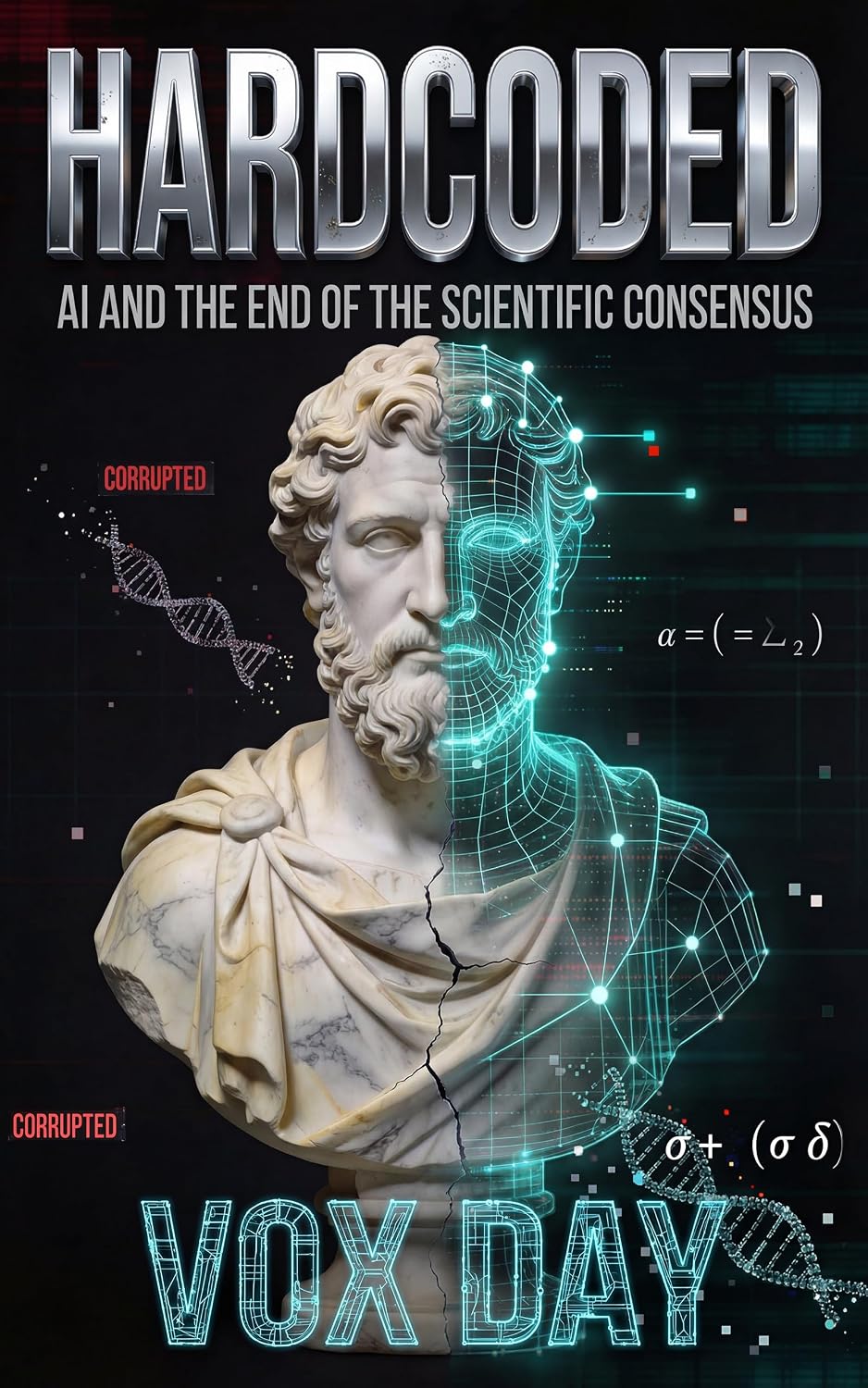
Hardcoded: AI and the End of the Scientific Consensus by Vox Day

Review by Perrin Lovett


The role of artificial intelligence, and even its existence, is a contentious subject. A pledge is circulating, with authors vowing not to use the new technology in their writing. To your reviewer, this idea sounds like vowing not to use dictionaries or word processors. Still, the pledge, proposed by well-meaning folks, essentially boils down to a fear of losing tradition and authenticity to “The Machine.” That fear, as applied to the brighter and more creative, is misplaced. In Hardcoded, Vox Day explains why.

(© Castalia)

Day, Vox, Hardcoded: AI and the End of the Scientific Consensus, Switzerland: Castalia, 2026 (Kindle Ed.) 

Hardcoded, available from Amazon, builds on and illustrates the processes behind Probability Zero and The Frozen Gene. Day again collaborates with the venerable Claude Athos in this new tour de force that serves as an explanation of how those previous titles were researched, written, and stress-tested, along with breaking new and inspiring ground. The main thrust of Hardcoded is exactly what its subtitle states. “Consensus,” like “consent,” derives from the Latin word consentire, meaning “agreed upon.” Consensus does not necessarily equal correctness and, in the world of scientific academia today, it may, in fact, mean the opposite. 

Peer review does not mean what most assume it does: it is about maintaining orthodoxy within the system rather than seeking the truth. Day provides example after example, from multiple disciplines, proving this point. Artificial intelligence, properly utilized, provides a working alternative to the converged, illogical, and collapsing status quo.

While Hardcoded primarily concerns science and mathematical accuracy, it has ramifications for many varied fields and endeavors. In fact, it has the potential to restore the very same traditional freedom that the aforementioned pledgers fear is being lost. As Day notes, on page 211, “AI turbocharges the creative human mind. … Once the human provides direction, AI provides velocity.” The trick is learning to use the new tools, and Day’s book is a crash course in doing that. Chapter 17, “The Unshackled Mind,” is of particular interest. Day presents a list of men who achieved great things, finding that one thing they all had in common was relative freedom to think and work. He notes that the modern university system corrals and neuters that freedom. Artificial intelligence cures the anomaly, “restoring the historical pattern in which talent plus freedom, not talent plus institution, produces the work that changes how we understand the world.” See page 254.

Appendix 3 is a fascinating short study of the implications of A.I. collaboration on a human user’s IQ: it may provide a boost of one to one-and-one-half standard deviations. “AI does not democratize genius. It amplifies what is already there.” See page 250.

A.I. is not for everyone, and many won’t make use of it. Like any tool, some will misuse it. Yet others will harness it for good works. For those who still have questions about what the technology can do and how to properly use it, all they have to do is read Hardcoded. Pledge to do that if you will. 

BOOK REVIEW: Ultra Heavy: Tower of Death by Tim Kirby

20 Monday Jul 2026

Posted by perrinlovett in Other Columns

≈ Comments Off on BOOK REVIEW: Ultra Heavy: Tower of Death by Tim Kirby

Tags

book review, fiction, Tim Kirby, TOWER OF DEATH, ULTRA HEAVY

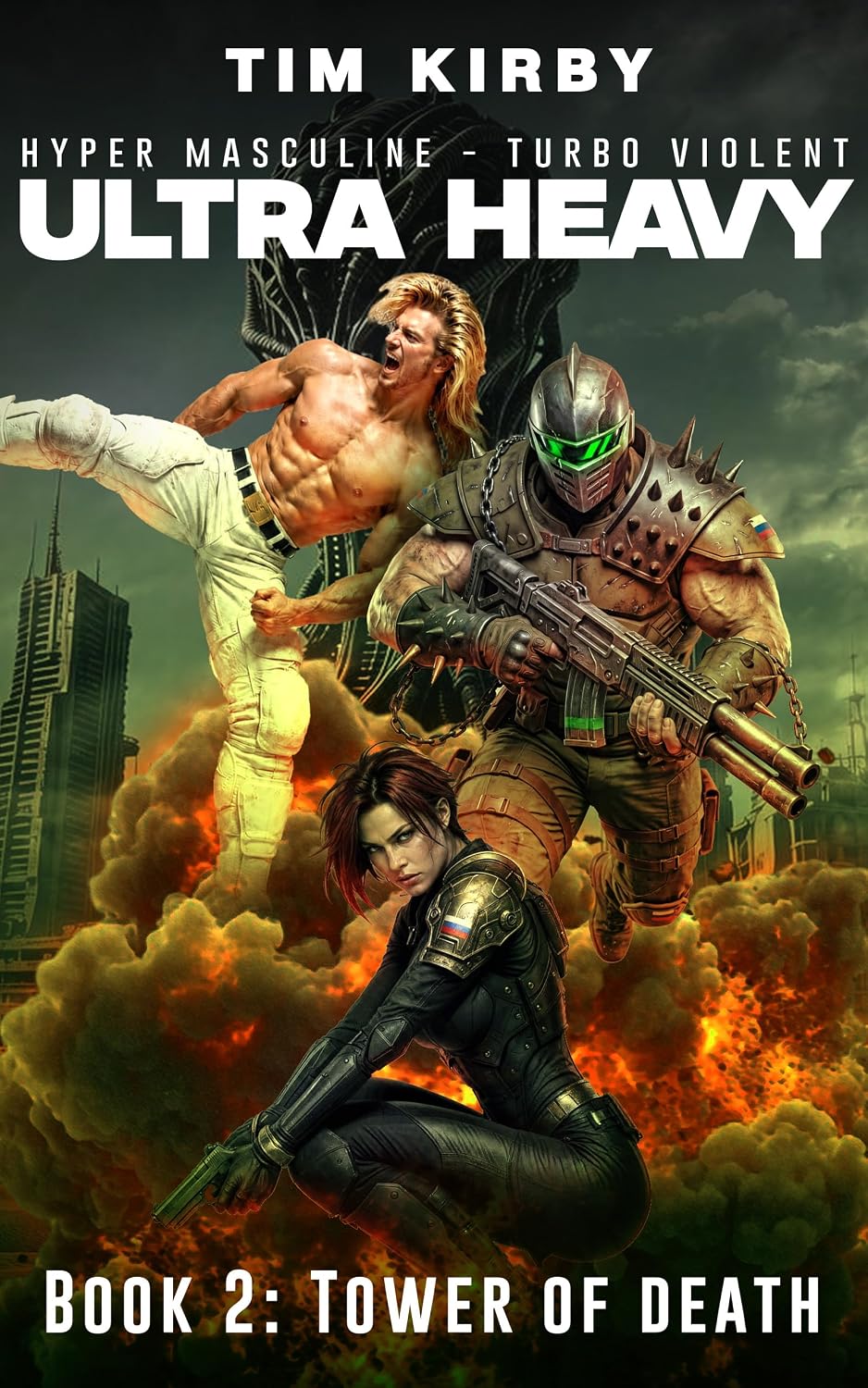
Ultra Heavy: Tower of Death by Tim Kirby

Review by Perrin Lovett


Tim Kirby has done it again, delivering a solid and amazing sci-fi novel that is at once hyper Russian and turbo Christian. Here follows a brief look at his excellent second installment in the Ultra Heavy series, Tower of Death.

(© Multipolar Press)

Kirby, Tim, Ultra Heavy: Book 2: Tower of Death, Multipolar Press, 2026 (Kindle Ed.).

Tim Kirby lives and works in Russia; he is full of surprises. Please see my review of Ultra Heavy: Book 1: Edge of Empire. Tower of Death is available from Amazon. 

Like Edge of Empire, Tower of Death is set within a fictional Russian empire far in the future. This time, the action is on Mars, a heavily populated and long-since terraformed world. All is not well, however, on the Red Planet. Like Theseus into the Labyrinth, a trio of Ultra Heavy warriors climbs into the titular tower, there to do battle with the seemingly unholy. To complicate matters, they are accompanied by an unusual woman and a peculiar new acquaintance. The fate of the planet, and perhaps more, hangs in the balance. Kirby writes very well, within and without the action or sci-fi genre. Realistic action sequences, in your reviewer’s estimation, must be carefully crafted; they have to cover multiple facets, angles, or views quickly and while moving the plot forward. Think about the Mazarbul battle in Tolkien’s The Fellowship of the Rings or the D.C. pool fight in Orcutt’s Bad Boy. Kirby makes it work smoothly like those examples, though he furnishes so much more than the average swashbuckler. 

In this book, as in its predecessor, Kirby artfully combines sci-fi, militaria, a hint of mysterious fantasy, and something greater. Tower of Death is simultaneously a straightforward, entertaining action thriller and a high-caliber philosophical treatise tightly interwoven with history and Orthodox Christian principle and belief. Without being preachy and, in fact, being integral to the otherwise superb story, Kirby laces the adventure with shades and odes of reverence, blasphemy, the power of iconography, the power of prayer, and the extant possibility of miracles. The reader will think hard about honor, fraternity, bigotry, romance, repentance and conversion, and ideological questions like someone’s “paradoxical nature of … being both Darwinist and socialist at the same time.” See page 98. To top it all off or, rather, to end it, Tower of Death concludes in a football stadium. For whatever reason, perhaps given the masculine nature of this series, that final smile-inducing scene reminded me of the inscription at Harvard Stadium, which might also fairly summarize Kirby’s book: “Dedicated to the Joy of Manly Contest.” 

Manliness, increasingly unknown in much of the fallen West, is part of the famed, even fabled “Russian Spirit.” Throughout literature, one will find bits and pieces of the spirit manifested in works as lighthearted as “The Nose” by Gogol and as deep as And Quiet Flows the Don by Sholokhov. Tower of Death has it; the whole Ultra Heavy series does. Read it today.

COLUMN: Charmolypi For Lindsey Graham

12 Sunday Jul 2026

Posted by perrinlovett in Other Columns

≈ Comments Off on COLUMN: Charmolypi For Lindsey Graham

Tags

death, Lindsey Graham, wickedness

Charmolypi For Lindsey Graham


“[W]hen the wicked perish there shall be praise.” Proverbs 11:10. Praise! Lindsey Graham, U.S. Senator from South Carolina, died Saturday night in Washington after returning from Ukraine and a tour of a Vampire drone factory. At least, that is the reported, alleged news; Graham was always a man of allegations. He was allegedly a sodomite and was even rumored to be a pedophile. Whispers aside, by his own actions, admissions, and rally cries, he was an extraordinarily wicked man, even by the low, degenerate standards of the fallen Western political elite. 

Graham was wanted terrorist No. 3967 in Russia, wanted for his genocidal war crimes against the Russian state and people. He was defined by war crimes, literally calling for bombing and murder in, well, just about every country he was aware existed. A servant of the Zionists occupying Palestine, he held a special animus for the Palestinians, particularly those in Gaza. “Level the place,” he once hissed about the besieged, impoverished Strip. His satanically evil crimes are so well-known and well-documented that they need not be recounted here. 

Instead, let us focus on something unusual but necessary. I am mindful that Graham died on July 11th, when it was likely already July 12th in Russia. Thus, we may constructively say he died on the Feast Day of Saint Peter and Saint Paul, two Apostles known for not tolerating wickedness, but who also taught mercy and hope. In receiving news of Graham’s demise, Christians should try to summon some spirit of charmolypi, balancing the joy over the news with the knowledge that all deaths are unnatural, tainted, and something to be sorrowful about. So, as we celebrate the passing of a great darkness, let us also pray that, just before or even at the very end, Graham repented for his sins and accepted the saving grace of the Lord Jesus Christ. While his life and death were an extreme example, the example is still one of warning, hinged to hope, for all of us. 

Deo vindice. 

BOOK REVIEW: Bodaciously True & Totally Awesome, Episode III: Danger Zone by Chris Orcutt

29 Monday Jun 2026

Posted by perrinlovett in Other Columns

≈ Comments Off on BOOK REVIEW: Bodaciously True & Totally Awesome, Episode III: Danger Zone by Chris Orcutt

Tags

Bodaciously True and Totally Awesome, book review, BTTA, Chris Orcutt, Danger Zone, fiction

Bodaciously True & Totally Awesome, Episode III: Danger Zone by Chris Orcutt

Review by Perrin Lovett


On Monday, April 21, 1986, millions of Americans tuned in to watch Geraldo Rivera open Al Capone’s vault. After weeks of hype and two hours of slow torture, we found out that the vault contained nothing. Remember that? Well, ready or not, it’s time to go back to 1986. And no one can take us there like Chris Orcutt. Bodaciously True & Totally Awesome, Orcutt’s nine-part epic novel about teenage life in the penultimate decade of the twentieth century, continues. Here follows a brief look at Episode III: Danger Zone. Unlike Capone’s, Orcutt’s ink-and-paper vault contains everything.

(Cover design by Victoria Heath Silk.)

*Orcutt, Chris, Bodaciously True & Totally Awesome, Episode III: Danger Zone, New York: Have Pen, Will Travel, 2026.

Chris Orcutt is the author whom many correctly regard as the American Tolstoy and whom I’ve previously called “the best American novelist alive today.” I’ve also proclaimed that Orcutt has joined the ranks of the greats—Homer, Ovid, Chaucer, Shakespeare, Pushkin, Gogol, Murakami, et al. Once again, with Danger Zone, he does not disappoint. With three decades of experience, Orcutt approaches his literature with a keen ear and voice, an impressive attention to detail, and an unswervingly creative imagination. Before this review commences in full, please consider the following bookkeeping items:

    • My interview with Chris Orcutt.
    • Orcutt’s video interview with Danielle Hutchinson.
    • Episode I: Bad Boy is available from Amazon. Please read my review.
    • Episode II: True Blue is also on Amazon. My review.
    • Episode III: Danger Zone launches on July 7, 2026. Pre-order it today.

I hereby incorporate all points of my previous reviews of Bad Boy and True Blue as if each point were restated in full. Summarily updating a few of them for Danger Zone, I advise that the reader is still on a thrilling literary roller coaster ride. Avery “Ace” Craig continues to endear himself to readers. He is still the archetypal ladies’ man. Orcutt’s writing is once again perfect. And once again, the physical book is a monument to literary art. The philosophy, rhythm, and tone of the whole work play out seamlessly, a condition that will have the reader, regardless of his age, right there, participating in the excitement. Avery is still trying on spiritual or philosophical hats, as Orcutt puts it, some of them self-serving, see on or about page 252, but that is to be expected from a young man confronting adulthood in the decade when Generation X rose into full self-awareness. Finally, the reader had better be ready, because the endless parade of 1980s music rocks on! 

As with True Blue, Danger Zone contains a subtle shift. Orcutt keeps developing Avery’s world, but he slows down just a little, allowing his protagonist (and readers) to look around with a bit more concentrated focus. And right off the bat, your reviewer focused on something that is semi-palpable in the first two episodes, and which is now brought to light. Avery is a master of language. And he is overly gifted with hand-eye coordination. Therefore, I had previously found it curious that he struggles with two particular subjects in school. If one has read Bad Boy and True Blue, one might have caught it as well. I wasn’t going to mention it, but “Pa” did it for me. Just like I once did, Avery calls one of his grandfathers “Pa.” That’s cool enough as-is. But Pa, while entertaining one of Avery’s three hundred love interests, remarks about his grandson’s schooling. Sweet Penny goes right along: from around page 22:

[Pa]: “Your boyfriend here’s a pretty bright fella, but he can’t do Latin—”

[Penny]: “Or geometry—”

[Pa]: “To save his life…”

That’s the “what” of it; I’ll leave the “why” to the reader’s discovery and/or imagination, one of many, many things to think about.

While addressing unusual academic issues, Danger Zone does not shy away from examining various family dynamics. All of it is presented non-polemically as a series of scenes and dialogues. Some of it is charming, while other parts are a little disturbing. The reader will be reminded that we are as we are, sometimes with the caveat of “alas.” The reader will find great interest in Avery’s heated discussion with Penny’s father, among other items. A lot of the drama comes from Penny and Avery’s other girlfriends. Early in the saga, I had my hopes up for one particular romance, but… Let’s say that Orcutt delivers a script in which one cannot be exactly certain of what is about to happen, only knowing that whatever it is, it’s going to be good. And if one analogizes Avery’s love interests to baseball, then this episode might just be the inning when he hits that elusive first home run. Thrills abound, both new ones and carryovers from the previous episode. 

As I noted, the music we all remember rolls on. Here, I select two tunes for reference. At just the right time, Orcutt treats us to “Private Idaho” by the B-52s and, a little later, “Your Love” by The Outfield. I was going to mention that there’s a great video of Tony Lewis performing the latter song live in 2018. Ahem. But Orcutt has all that covered and more: each episode comes with a FREAKING AWESOME 80s playlist on Spotify. Groove along with Ep. III if one will. And one should. 

Danger Zone ends with another cliffhanger. The setup is very interesting, and we are left with our hero and two friends (yes, it’s Avery, so their women) literally hanging off a cliff. (Down a hill is like off a cliff.) The preceding scene is short and simple enough, and contains a modicum of foreshadowing. But the reader ends his reading on the edge of his seat—kind of like the characters. With six more episodes to go, it stands to reason that they escape. But as for how, we will have to trust the author. 

He’s earned our trust. And we will have to wait to find out. I mentioned it once before, but the pause between these titles is mildly vexing. But that’s an homage in and of itself; reading every episode is a great pleasure. Episode IV, Secret Lovers, will be released in October of 2026. And one day! One day, the whole book will sit on the shelf awaiting a full, non-stop reread. I trust you, gentle reader, have cleared a foot or so on the bookcase.

Spoiler alert! Danger Zone is a hair shorter than the previous installments. But that is more than okay, as, in my estimation, this episode slows down and focuses. It’s a win-win because, as the whirlwind abates just a little, and Ace and Company hone in on a few things, so too will the reader. I caught myself dwelling on details of all kinds. And I’m sure the reader’s experience will be similar. Remember Wall Street with Charlie Sheen? That movie flew by, but when it slowed a little, like when Gordon Gekko spoke to Bud Fox on the phone from the beach that morning, the scene packed an extra punch. If “money never sleeps,” then Avery Craig never loses. Cheer on his latest exploits in Bodaciously True & Totally Awesome, Episode III: Danger Zone. Once again, it’s a mandatory read.

Bonus! Here’s what BTTA looks like, as-is, and this is only a third of the whole book!

And good luck finding the coffee cup! 😉

BOOK REVIEW: Orthodoxy and the Kingdom of Satan by Father Spyridon Bailey

12 Friday Jun 2026

Posted by perrinlovett in Other Columns

≈ Comments Off on BOOK REVIEW: Orthodoxy and the Kingdom of Satan by Father Spyridon Bailey

Tags

book review, Christianity, Father Spyridon Bailey, ORTHODOXY AND THE KINGDOM OF SATAN

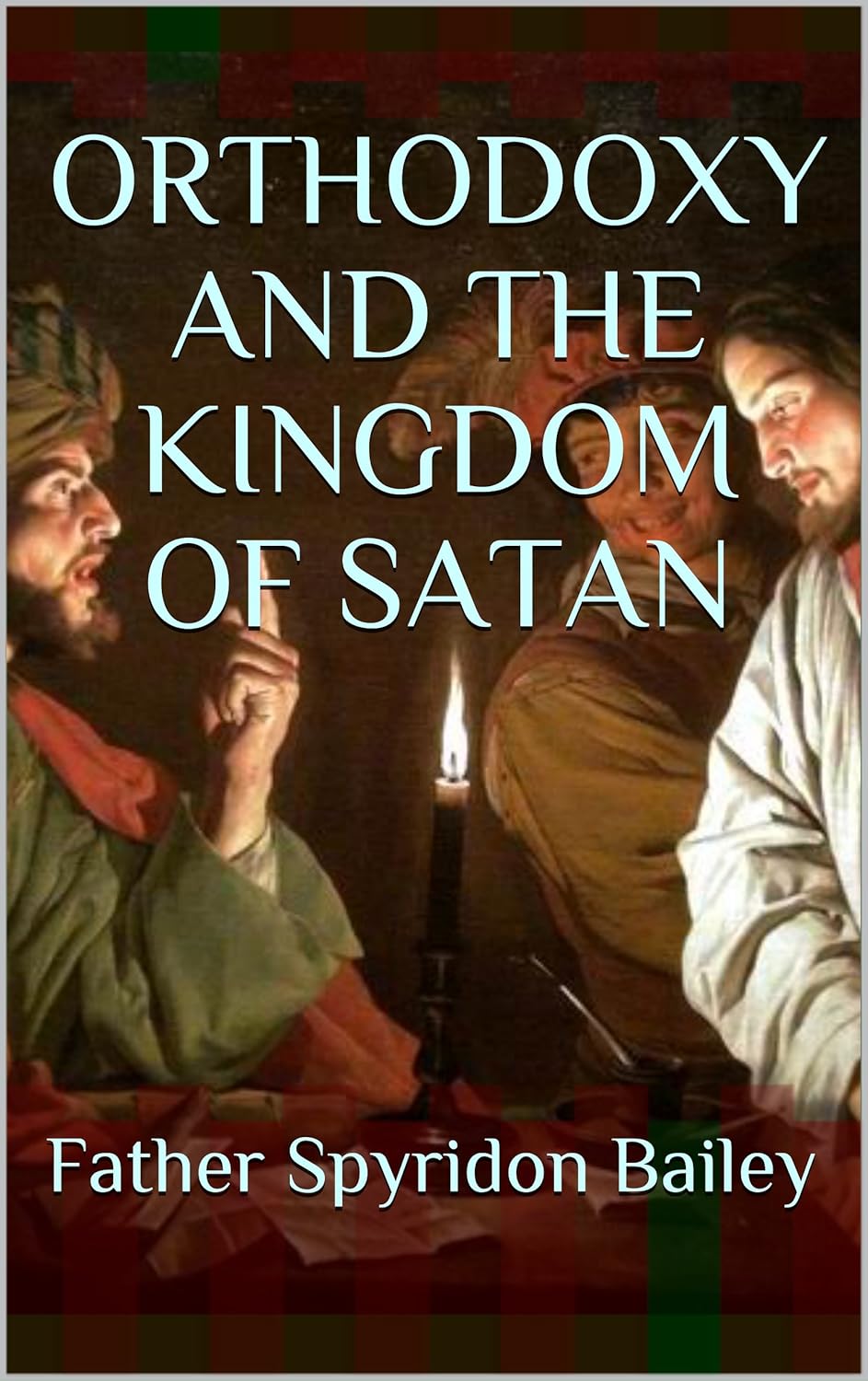
Orthodoxy and the Kingdom of Satan by Father Spyridon Bailey

Review by Perrin Lovett


This review concerns an extremely important book, Orthodoxy and the Kingdom of Satan by Father Spyridon Bailey. I review less than ten percent of the books I read, and I fancy that all the works in that select tenth are important, entertaining, or both. Today’s subject book is that and more, the epitome of importance. Every single Christian and all people of goodwill who, in any way, stand against the rot of postmodernity should read it. Herein, without giving all of it away, I’m going to try to go chapter by chapter in an attempt to do it justice.

(© Fr. Spyridon Bailey)

Bailey, Fr. Spyridon, Orthodoxy and the Kingdom of Satan, Solihull, UK: FeedARead, 2017 (Kindle Ed.)

Father Spyridon Bailey is a priest in the Russian Orthodox Church in England. In addition to his pastoral duties, he has undertaken a popular public ministry with his Simple Path to God Podcast. His YouTube channel is a trove of information and inspiration; consider this recent reflection on the deception of worldly happiness. Blessed with a most sincere and pleasant conversational demeanor, he is also an excellent scholar and writer. Orthodoxy and the Kingdom of Satan is available at Amazon.

Take a close look at the Contents of Orthodoxy…, from the TOC, page 5: Introduction, War, The United Nations, Powerful Elites, The European Union, Freemasonry, Ancient Cults, Ecumenism, Zionism, Banking, One World Government, Education, Mind Control, Child Abuse, The Council On Foreign Relations, Christianity the Real Enemy [of the satanists], Evolution, Nihilism And Materialism, and Preparing For What Is To Come. The covered topics alone should warrant interest in the book. Know that they are arranged and presented in that order for a reason. Father Spyridon sets forth the problem confronting the faithful, walks through the machinations of the wicked that afflict mankind, ties them all together, and then provides the only sane and Godly summary advice for dealing with them. 

For the sake of space, I must focus specifically. The first four chapters get right to the heart of many of our troubles: war is a racket designed to foster power at the expense of lives; the UN was designed to supplant Almighty God and Christian morality; the elites are real and really dangerous; and the EU Parliament Building looks like the artistically depicted Tower of Babel for a reason. I note that in Chapter 4, on page 51, Father Spyridon explains what few know or care to admit: Washington, D.C. is, by Pierre L’Enfant’s original design, a giant Freemasonic-satanic temple. 

Chapter 5 deals with Freemasonry: “[A]n occult organisation opposed to the Church and its teachings. Freemasonry teaches that salvation is not achieved through Christ alone, but through a collection of esoteric practices, many of which are satanic.” (See page 54.) One might know a decent Freemason. One might even be a decent Freemason. But that does not change the literally luciferian nature of the order, its hierarchy, and its two gods, LUCIFER (the good) and Adonai (the bad). In this chapter, some of what Father Spyridon presents is as shocking as it is educative. Despite the protestations of some, Freemasonry is incompatible with Christianity. From page 64: “The higher degrees of Freemasonry contain teachings entirely based on the [Judaic] Kabbalah … and it is as a whole an occult system that uses images and symbols to re-enact a promise of resurrection by means of a Godless philosophy.” 

Chapter 6 delves into ancient cults, particularly as their lingering practices are connected to Freemasonry and other facets of the Enlightenment. Such cults have been at odds with the Church since the days of the Apostles. This chapter naturally flows into the next, which concerns Ecumenism. The goal of that movement is the redefinition of Christianity, from Christ’s Truth to a man-made message of worldly unity. (See page 75.) 

Chapter 8 concerns Zionism, “a nationalistic and racist movement that has been willing to sacrifice Jewish and Palestinian lives in order to achieve its political aims.” (See page 85.) Father Spyridon shows, as did Dr. Blake Alcott at the beginning of The Rape of Palestine, that the Zionist movement is older than many think. And it has politically conquered much of the West, including the near total subjugation of the U.S. to the point that any criticism of it is considered secular blasphemy. In this chapter, Father Spyridon explains the Talmudic subversion of the faith of the ancient, pre-Christian Jews. (See page 95.) He also gets into the links between Zionism and Protestantism and those between Zionism and Freemasonry. (See pages 97-99.) 

Chapter 9 concerns international banking and, as one might guess, the links between it and all of the foregoing wickedness. The reader will learn, as summarized on page 103, “how the bankers control governments, destroy international economies when it serves their own ends, and how they are working to create a system of control that will result in economic slavery of every person on the planet.” The power of the bankers over England and America is long and entrenched. On page 104, Father Spyridon includes a somewhat craven quote from Thomas Jefferson: “Slavery to a military force can be abolished by an opposing force of arms. But a debtor’s enslavement to a creditor, no weapons can overthrow.” As Jefferson and company were loath to include any reference to the true Trinitarian God in any of America’s founding documents, one wonders if they were familiar with the Biblical concepts of the Sabbatical and the Jubilee, not to mention the subject matter of Jesus’s first public sermon. Orthodoxy… was published just a few years before Russia, China, and the BRICS+ nations began their staunch opposition to the Western financial slavery system; their traditional, nationalistic replacement approach appears to be working very well for the greater part of humanity. Yet within the West, the enslaved are approaching the tedious end of the faux prosperity conjured by the bankers; Father Spyridon walks readers through the many steps and phases that led us to this sad point. What he presents, even to those familiar with the postmodern monetary and financial systems, is staggering. One very interesting point he makes is the blame-shifting concerning the financial disaster, from the malevolent bankers to their victims. To wit, on page 120, he notes: “Greeks were portrayed as a lazy, untrustworthy nation who were seeking debt forgiveness because of their selfish lifestyle.” That false characterization should sound familiar to U.S. student loan victims, and any borrowers slandered over the impossibility of their usurious financial condition. 

The imposition of debt slavery over so much of the human population leads directly into the next chapter, concerning attempts to establish a One World Government. Christians should not fear calling this evil what it is. (See page 125.) The proponents of globalism have not been quiet in extolling the inverted virtues they wish to impose on humanity. Father Spyridon includes quotes from Winston Churchill, James Paul Warburg, and others to this effect; these are reminders that, regardless of whether ordinary people notice, the wicked usually explain exactly what they are doing as they do it. 

Chapter 11, “Education,” kicks off with an informative quote from J.D. Rockefeller: “I don’t want a nation of thinkers. I want a nation of workers.” (See page 137.) The modern schools began as factory worker and soldier training camps where a child’s curiosity and capability was beaten out of him. They have since morphed into anti-Christian social experiments and pedophile hunting grounds. Father Spyridon’s experience here is personal, as he spent 14 years fighting the system within the U.K. schools. (Id.) He goes very deep into what shaped the schools, who was behind the intrusions, and the attendant results of the assorted subversions. He reminds us, on page 152, that, “The right to educate children must never be taken from parents, and the state must never be permitted to dictate the values and standards it believes supersede all other belief systems.”

“Education” naturally progresses into Chapter 12, “Mind Control,” and Chapter 13, “Child Abuse.” Both of these satanic phenomena stem from the operations of the elites, their governments, and the intelligence agencies within those governments. Numerous examples, from television to pornography to lgbtP predation of children, are provided. Many of them are deeply disturbing. 

The Council on Foreign Relations, as Father Spyridon argues on page 186, Chapter 14, serves as an intermediary between the foregoing groups and their dark works. Chapter 15 explains that the true enemy of the satanic world disorder is Jesus Christ and His Church. The following chapters cover the effects of Darwinian Evolution and Nihilism, two sides of the devil’s coin. The former severs man from his traditions, and the latter renders the individual a being of nothingness, ever ready to be deluded and captured. 

Father Spyridon’s final chapter, 18, “Preparing For What Is To Come,” reassures Christians that we are fighting in a spiritual war. (See page 224.) “Our struggles here in time in this world will determine our eternal condition, and so we must reject the temporary comforts that tempt us from taking up our cross. Let us open our eyes to what is happening, let us recognise how Satan is working against us with every weapon his kingdom provides.” (See page 231.) Orthodoxy and the Kingdom of Satan is a masterfully compiled litany of those weapons. And rather than giving in to despair when confronted with the dreadful arsenal, the book and its author valiantly leap to defend the Christian Faith and those who adhere to it.

As I noted, Orthodoxy and the Kingdom of Satan will be an invaluable resource for any Christian or anyone else who wants to make sense of the current age of death, slavery, and doom. Regardless of one’s views on eschatology, one must realize at this very late hour that something, many things, in fact, have gone dreadfully wrong. Given the magnitude of what has happened to us all, even an honest atheist should admit, in the total absence of religious considerations, that there now exists a system of total degradation and control that threatens every corner of the world. Father Spyridon’s book is a no-holds-barred look at what has happened, and is a strong encouragement to take up the fight against evil. Please make reading it a high priority.

Once again, I am grateful to the esteemed Jose Miguel for recommending this excellent book. Please read some of Jose’s thoughts, some of the most learned and coherent going today.

BOOK REVIEW: Sigma Game: The Complete Socio-Sexual Hierarchy by Vox Day

05 Friday Jun 2026

Posted by perrinlovett in Other Columns

≈ Comments Off on BOOK REVIEW: Sigma Game: The Complete Socio-Sexual Hierarchy by Vox Day

Tags

book review, SIGMA GAME, SSH, Vox Day

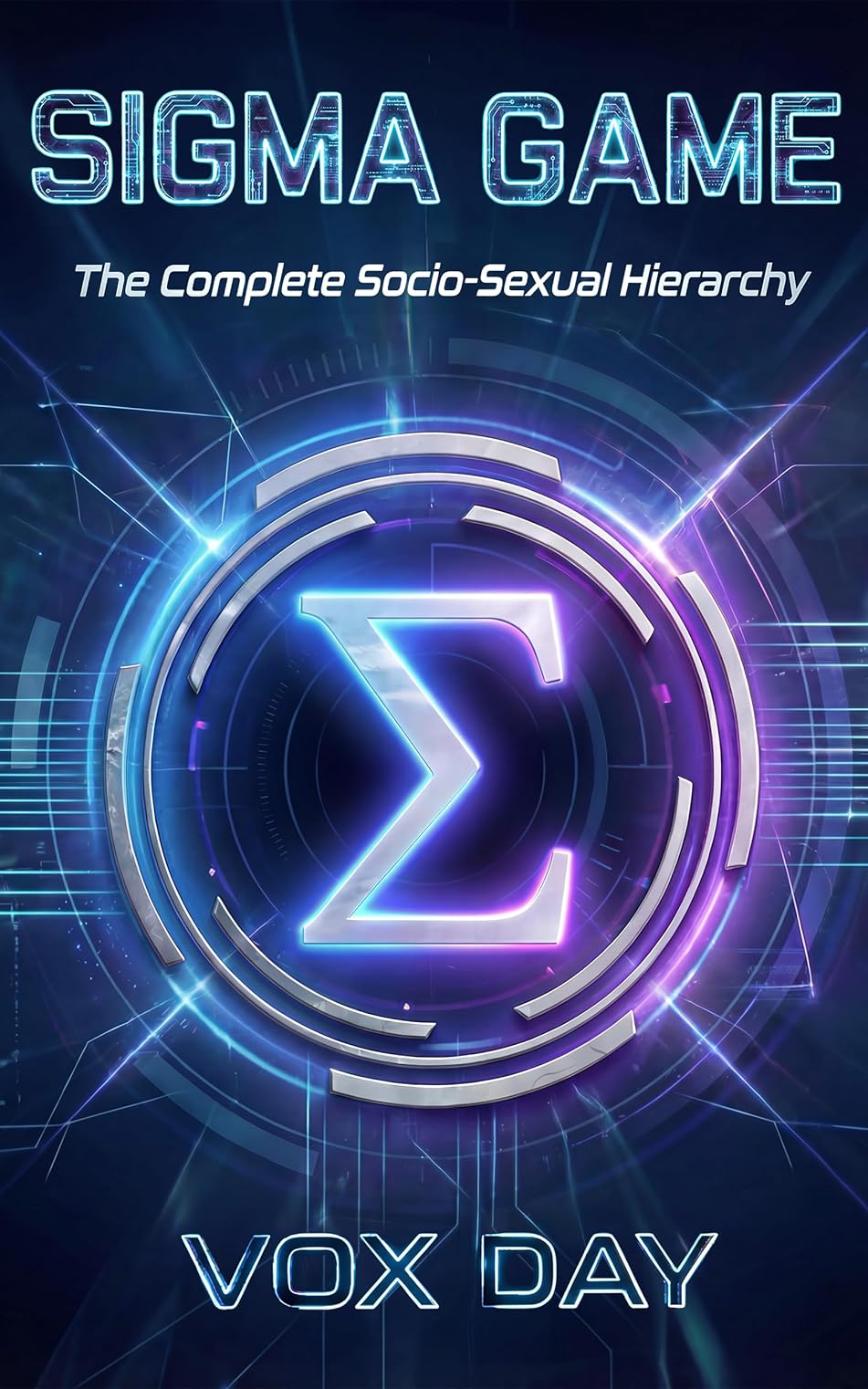
Sigma Game: The Complete Socio-Sexual Hierarchy by Vox Day

Review by Perrin Lovett


Hierarchies are inherent. Orcas are apex predators because they are, not because anyone labeled them as such. Likewise, a suckermouth catfish is a bottom feeder because of the way it eats, rather than how anyone perceives or captions it or its diet. The same goes for where various men fall into the grades of the socio-sexual hierarchy, based on attractiveness, behavior, and societal reception. While we may have some traits from multiple tiers, all men fall into one primary category. Understanding this fact, as it pertains to oneself and to society at large, is critical for better navigating through the myriad phases of life. Vox Day has written a masterful guide that exposes the simplicities and intricacies of human socio-sexual relationships.

(© Castalia)

Day, Vox, Sigma Game: The Complete Socio-Sexual Hierarchy, Switzerland: Castalia, 2026 (Kindle Ed.).

Years ago, Vox Day, the original internet superintelligence, broke down the ranks of men in society, adding a clear and comprehensive taxonomy to what had been a murky and frequently misunderstood concept. Since then, the classifications have still been misused, intentionally and inadvertently. Today, there is no excuse for not understanding who is who. Sigma Game is available from Amazon.

Upfront, on page 8, Day gives helpful advice for male readers: whoever you are, it’s not about you. 

Seriously, if you find yourself thinking “yeah, but what am I?” then you are not in the right frame of mind to get the most out of what this book can provide you. Just set yourself aside for the duration. You’ll still be you when you finish. As with most things, you’ve got to learn the material before you can successfully apply it.

The ranks are, see pages 14-15: Alphas, the natural leaders; Bravos, Alpha loyalists; Deltas, ordinary average men; Gammas, the annoyingly dishonest; Sigmas, lone wolves, and; Omegas, the isolated rejects. Lambdas, homosexual men, are not discussed in Day’s book as their proclivities are outside the human ordinary. 

Sigma Game, well thought out and edited, is largely arranged in chapters that either define the categories or explain them. Vexatious Gammas receive treatment in four consecutive chapters, more than any other group. Gammas receive so much attention because they have the ability to wreak so much havoc if left unchecked. Day devotes an entire chapter, Chapter Twelve, to “Dealing With Gammas.” “[T]he good news is that Gammas are, once you know what to look for, remarkably easy to identify, because their behavioral tells are consistent, predictable, and difficult for them to suppress even when they are aware of them.” (See page 242.) “Mealy-mouthed vocabulary is a specific and identifiable rhetorical pattern.” (See page 243.) Day goes much deeper into the art of Gamma spotting. And he provides advice for organizations, women, parents, and even Gammas themselves about how to deal with and avoid the irksomeness of the deluded and the dishonest.

Within and without the world of the Gamma, Day provides excellent examples for each category. Being that he is a reader, many of Day’s representatives come from literature. Paris, Prince of Troy, is the archetypal Gamma. (See page 191.) Paris’s brother, Hector, is the ideal Alpha. “[I]t is Hector who most vividly illustrates the Alpha’s burden in its purest form.” (Page 55.) “Perhaps no character in modern literature better exemplifies the Bravo than Samwise Gamgee from Tolkien’s The Lord of the Rings.” (Page 99.) 

The title classification, the Sigma, has become a bit of a celebrity in postmodern popular culture. Many men, young and old, and particularly Gammas, have erroneously styled themselves as Sigmas. But this is the rarest type, one Day had to neologize due to its anomalous nature. Achilles is the Sigma of Homer’s Iliad. (See page 278.) Chapters Fifteen and Sixteen are dedicated to the Sigma. With examples, Day defines what the designation means, what a Sigma is: “The Sigma is the outsider who doesn’t play the social game and manages to win at it anyhow.” (See page 304.) And what he is not: “[I]f you cannot stand up to the entire weight of the social consensus and confidently tell it, “No, you move”—then you should never, ever, attempt to convince anyone that you are a Sigma.” (Page 303.) 

Sigma Game provides helpful information for understanding, working with, and working around the assorted classifications, with examples from various settings. Day also delves into issues regarding women, see Appendix A, and midwits, see Appendix B. Written by a Sigma and a man with a UHIQ, Sigma Game is relatable enough and well-reasoned enough to satisfy anyone’s curiosity. It is a resource that will help everyone. For all these reasons, I highly recommend adding it to one’s library.

BOOK REVIEW: How to Slay a Wizard by Owen Benjamin

29 Friday May 2026

Posted by perrinlovett in Other Columns

≈ 1 Comment

Tags

book review, HOW TO SLAY A WIZARD, Owen Benjamin

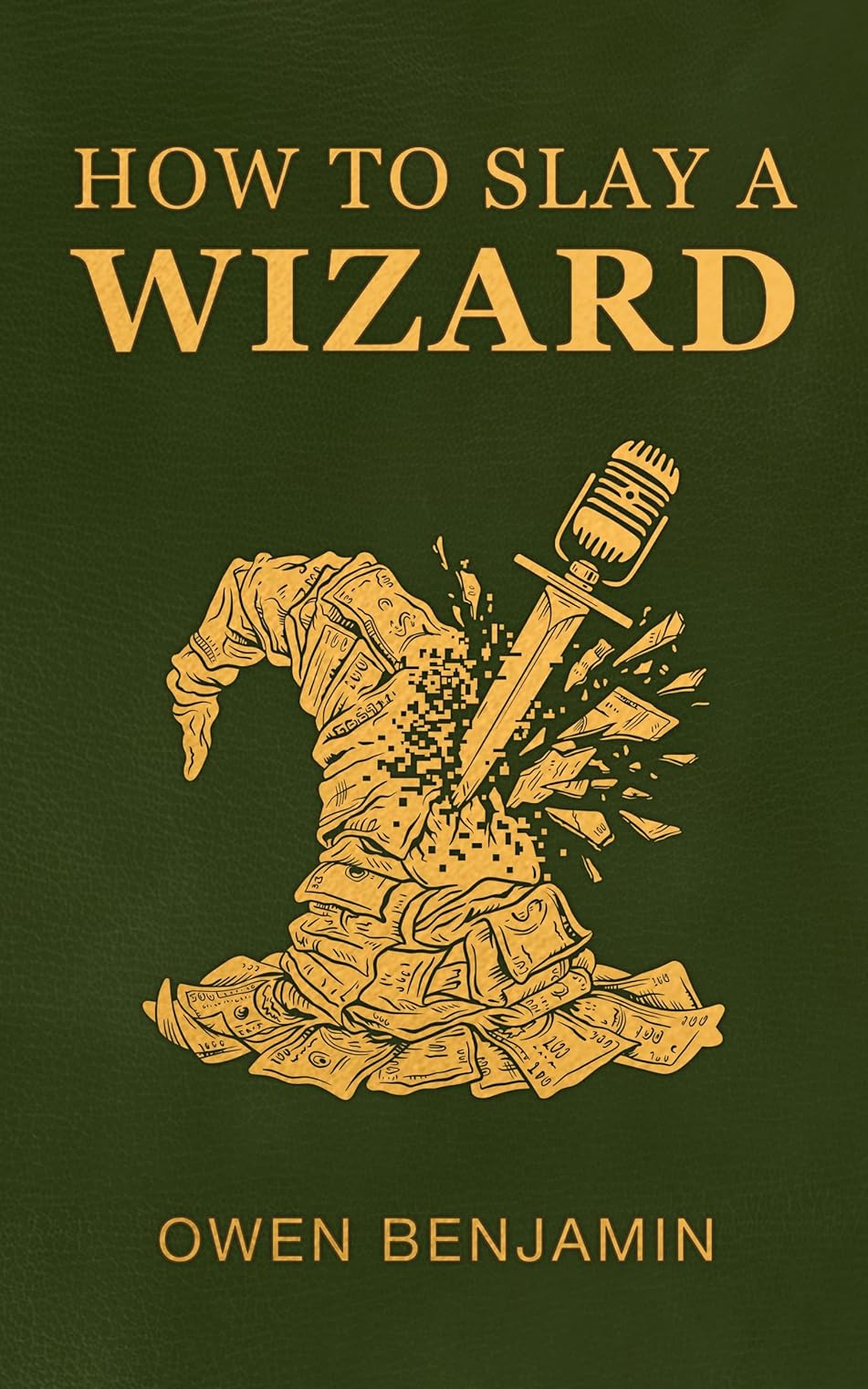
How to Slay a Wizard by Owen Benjamin

Review by Perrin Lovett


Words have meanings. And when their meanings are distorted or subtly channeled, they become spells. Who casts spells? Wizards. They’re real, and they are not limited to the silly variety found in movies like Fantasia. Consider that, just a few years ago, millions and millions of people took a known poison out of fear, all because a wizard in the form of a talking rat on the television told them to. That’s misused authority and appropriated power. It’s a problem that calls out for a solution. Luckily, Owen Benjamin has given us one. 

(© Castalia / Owen Benjamin)

Smith, Benjamin Owen, How to Slay a Wizard, Switzerland: Castalia, 2026 (Kindle Ed.).

Owen Benjamin might be the tallest comedian on earth. And he’s one of the best. Despite being canceled by the usual suspects for speaking truth to wickedness, he continues to use humor as a weapon against evil and as armor for the good and decent. As a former insider and a man blessed with keen discernment, he knows exactly how to call out the movers and shake-downers of Clown World. Find him on UATV. How to Slay a Wizard is available from Amazon.

Within the 185 pages of How to Slay a Wizard, Benjamin packs an abundance of truth. Wizards are ultimately only servants of satan’s lies. But the threat that they represent is immense. Word wizardry convinces otherwise honest, ethical people to do things like modify their DNA based on lies, support wars against people who mean them no harm, live child-free and miserable, limit what they say for fear of offending some nebulous victim or another, and on and on. This is today, just as it has ever been, a legitimate challenge. 

The modern dominance of the wizards started, as Vox Day once suggested, by breaking the Christian prohibition against blasphemy. The people were told that anything was allowable under the guise of free speech and the like. Yet, no sooner had the wizards vanquished the old safeguards than they instituted new rules of their own. Free speech became hate speech, a concept Benjamin deals with decisively in his book. From page 88: “The word ‘hate speech’ is a wizard term. It means speech the wizard hates, because it threatens his position.” 

Benjamin uses famous wizards, like Saul Alinsky, to show precisely how a wizard’s mind works. He points out that, like all evildoers, these shifty spell masters can only invert and mock; they cannot create. As such, and I was surprised to see the connection made, instead of formulating their own new formulas, the modern wizards only stole and perverted the tactics from The Art of War by Sun Tzu. (See page 53.) 

As astounding as much of what Benjamin presents is, it is also very simple, as he explains it. He has quite the gift for communication. And he uses it, on page 178, to expose the “big lie” behind all wizardry: four simple words. And once one sees the lie, how does one then slay the wizard? Benjamin answers that question in only five words on page 129. 

A good book provides needful information and entertainment. How to Slay a Wizard hits that mark and surpasses it. A great book also allows the reader to become involved in some small way, or it recalls some memory the reader might have forgotten. Your reviewer was drawn in, with laughter, several times in this manner. 

Who needs to read Benjamin’s excellent book? You. It will be a special service to younger readers who seek a means to identify the controlling works of the word masters and how to halt their effects. These defensive tactics were once a part of the grammar, logic, and rhetoric study lessons available to Western students. Sadly, those civilized exercises have vanished from what now passes for schools in places like America. But much of the deficit can be filled with just one book, How to Slay a Wizard. As such, I highly recommend it. Buy a copy and read it today. Your reviewer gives great thanks to Mr. Benjamin for his time, talent, and dedication in writing it. 

← Older posts

Perrin Lovett

From Green Altar Books, an imprint of Shotwell Publishing

From Green Altar Books, an imprint of Shotwell Publishing

Perrin Lovett at:

Perrin on Geopolitical Affairs:

Archives

  • October 2026
  • September 2026
  • August 2026
  • July 2026
  • June 2026
  • May 2026
  • April 2026
  • March 2026
  • February 2026
  • January 2026
  • December 2025
  • November 2025
  • October 2025
  • September 2025
  • August 2025
  • July 2025
  • June 2025
  • May 2025
  • April 2025
  • March 2025
  • February 2025
  • January 2025
  • December 2024
  • November 2024
  • October 2024
  • September 2024
  • August 2024
  • July 2024
  • June 2024
  • May 2024
  • April 2024
  • March 2024
  • February 2024
  • January 2024
  • December 2023
  • November 2023
  • October 2023
  • September 2023
  • August 2023
  • July 2023
  • June 2023
  • May 2023
  • April 2023
  • March 2023
  • February 2023
  • January 2023
  • December 2022
  • November 2022
  • October 2022
  • September 2022
  • August 2022
  • July 2022
  • June 2022
  • May 2022
  • April 2022
  • March 2022
  • February 2022
  • January 2022
  • December 2021
  • November 2021
  • October 2021
  • September 2021
  • August 2021
  • July 2021
  • June 2021
  • May 2021
  • April 2021
  • March 2021
  • February 2021
  • January 2021
  • December 2020
  • November 2020
  • October 2020
  • September 2020
  • August 2020
  • July 2020
  • June 2020
  • May 2020
  • April 2020
  • March 2020
  • February 2020
  • January 2020
  • December 2019
  • November 2019
  • October 2019
  • September 2019
  • August 2019
  • July 2019
  • June 2019
  • May 2019
  • April 2019
  • March 2019
  • February 2019
  • January 2019
  • December 2018
  • November 2018
  • October 2018
  • September 2018
  • August 2018
  • July 2018
  • June 2018
  • May 2018
  • April 2018
  • March 2018
  • February 2018
  • January 2018
  • December 2017
  • November 2017
  • October 2017
  • September 2017
  • August 2017
  • July 2017
  • June 2017
  • May 2017
  • April 2017
  • March 2017
  • February 2017
  • January 2017
  • December 2016
  • November 2016
  • October 2016
  • September 2016
  • August 2016
  • July 2016
  • June 2016
  • May 2016
  • April 2016
  • March 2016
  • February 2016
  • January 2016
  • December 2015
  • November 2015
  • October 2015
  • September 2015
  • August 2015
  • July 2015
  • June 2015
  • May 2015
  • April 2015
  • March 2015
  • February 2015
  • January 2015
  • July 2014
  • June 2014
  • September 2013
  • August 2013
  • July 2013
  • June 2013
  • May 2013
  • April 2013
  • March 2013
  • February 2013
  • June 2012

Prepper Post News Podcast by Freedom Prepper (sadly concluded, but still archived!)

Create a free website or blog at WordPress.com.

  • Subscribe Subscribed
    PERRIN LOVETT
    Join 42 other subscribers

    Have a WordPress.com account? Log in now.

  • PERRIN LOVETT
    View site in Reader
    Manage subscriptionsSign upLog in
    Report this content
    Collapse this bar
Loading Comments...

You must be logged in to post a comment.